
CS-001 — Specialist Vehicle Corrosion Repair: Reviewing the Completed Work
Specialist Vehicle Corrosion Repair: Reviewing the Completed Work
A specialist commercial vehicle underwent substantial body repair, corrosion rectification and refinishing work.
After the work was completed, concerns developed about recurring corrosion, deterioration in repaired areas and whether the completed repairs would provide a durable commercial outcome.
Corsa Dynamics was engaged to independently inspect the vehicle, review the available repair photographs and documentation, and establish what the visible technical evidence supported.
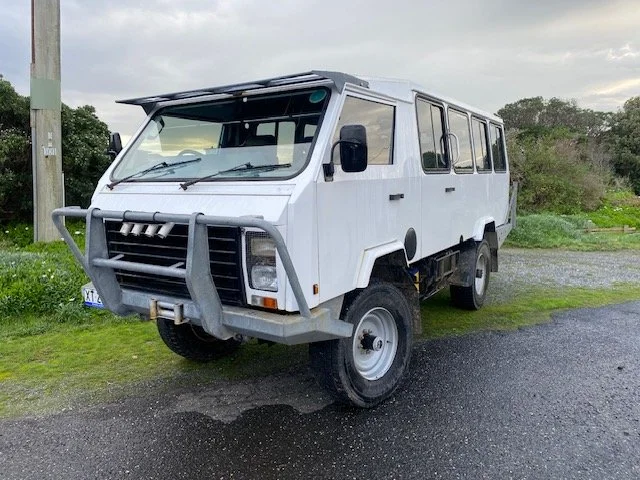
Overall presentation of the specialist vehicle following completion of the repair and refinishing work.
The Assessment Question
The vehicle had documented corrosion before the repair work commenced. That earlier condition formed part of the assessment and could not be disregarded.
The question was not simply whether an older vehicle had previously experienced corrosion.
The assessment considered the condition presented following the recently completed work, the relationship between visible defects and documented repair locations, and whether further investigation was required to establish an appropriate rectification pathway.
How the Assessment Was Conducted
The assessment included a non-invasive physical inspection of the vehicle together with a review of available correspondence, pre-repair photographs, repair-process images and post-repair information.
Visible repaired areas, panel seams, door and window apertures, mounting points, sealing systems and refinished surfaces were examined.
No glazing, trims, linings or body components were removed. The assessment therefore recorded the visible condition and identified where dismantling would be required before the concealed condition or full rectification scope could be established.
What the Inspection Recorded
From a normal operating distance, the vehicle’s external painted finish generally presented to a reasonable visual standard.
Closer inspection recorded corrosion staining, blistering, coating deterioration and rust egress at a number of seams, apertures, mounting points and repaired areas.
Evidence consistent with moisture pathways and deterioration of sealing systems was also observed. Some visible conditions corresponded with locations shown as repaired in the supplied repair-process photographs.
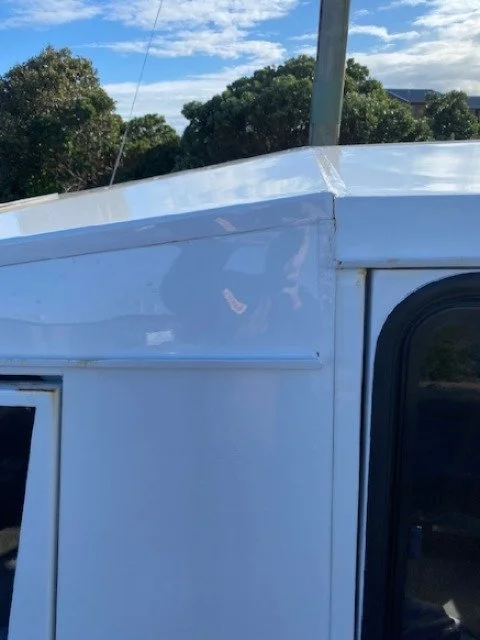
External Appearance and Underlying Condition
A completed paint finish can present well externally while conditions remain within seams, folded edges, enclosed cavities or repaired structures.
This distinction was important in the assessment. The visible finish alone could not establish whether corrosion had been fully removed, whether concealed surfaces had been protected or whether moisture pathways remained.
The condition therefore needed to be considered across both the external presentation and the evidence visible within less accessible areas.
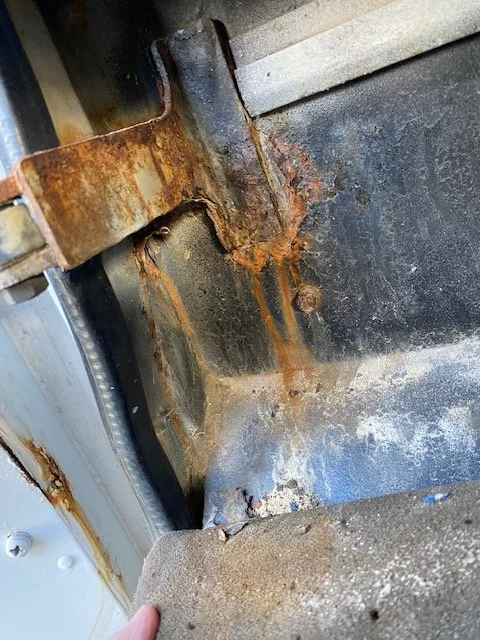
Relating the Observations to the Repair Work
The available repair-process photographs identified a number of locations where patching, panel repair and corrosion rectification had been undertaken.
During the later inspection, deterioration was visible within or adjacent to some corresponding locations.
That relationship was technically relevant, but it did not establish the complete condition concealed beneath the coatings or inside the repaired structures. Further investigation would be required before the full repair history, substrate preparation and internal corrosion protection could be verified.
Key Point
A visually acceptable finish does not, by itself, establish the condition or durability of the structures beneath it.
Independent assessment can preserve the evidence, distinguish observation from assumption and define the investigation needed before the parties commit to a rectification pathway.
Why Further Investigation Was Required
The number and distribution of visible conditions indicated that a reliable rectification scope could not be prepared from external inspection alone.
Controlled removal of selected glazing, seals, trims and linings would be required to expose repaired seams, enclosed cavities and concealed panel structures.
Only after that investigation could the extent of active corrosion, condition of earlier repairs, effectiveness of sealing and corrosion protection, and appropriate repair methodology be determined with greater certainty.
Establishing the Rectification Pathway
An external cosmetic response would not address conditions potentially originating within seams, enclosed structures or previous repair locations.
The assessment therefore identified a staged pathway: preserve the available evidence, undertake controlled dismantling, inspect the exposed structures and then prepare a rectification scope based on what was actually found.
This avoids committing to either isolated repairs or extensive reconstruction before the concealed condition is known.
What This Case Demonstrates
Assessment of completed corrosion repairs requires more than judging the external paint finish.
The earlier vehicle condition, documented repair locations, visible post-repair conditions, sealing systems and limitations of inspection must all be considered together.
Where important structures remain concealed, a sound assessment should identify what the evidence establishes, what remains uncertain and what investigation is required before a final rectification decision is made.